How I Tamed My Car Loan and Grew My Money Mindset
I used to dread my monthly car payment—it felt like throwing cash into a black hole. But what if your car loan could actually help you build a smarter relationship with money? I shifted my mindset from debt stress to financial growth, and it changed everything. No magic tricks, just real habits that work. Let me show you how I turned a financial burden into a stepping stone for smarter investing. At first, the numbers seemed overwhelming. The interest, the long repayment term, the feeling that I was working just to cover a single expense—it drained my confidence. But once I stopped seeing the loan as a failure and started treating it as a catalyst for change, everything shifted. This is not a story about getting rich quick. It is about gaining control, building resilience, and creating a foundation for lasting financial well-being.
The Moment I Realized My Car Loan Was Costing Me More Than Just Cash
For months, I made my car payment on time, barely glancing at the statement. It was just another bill, like electricity or internet. But one day, curiosity got the better of me. I pulled up my loan details and calculated the total interest I would pay over five years. The number stunned me. I was going to hand over nearly 25% of the car's value in interest alone—money that would never come back, never grow, and never work for me. That realization hit harder than the monthly withdrawal from my account. It wasn't just the cost of transportation; it was the opportunity cost of what that money could have done if invested instead. I began to see that every dollar spent on interest was a dollar not compounding in a savings account or funding future goals.
This awareness marked a turning point. I started treating my loan not as a fixed expense but as a financial mirror. It reflected my spending choices, my borrowing habits, and my long-term planning gaps. I asked myself: why had I accepted such a high interest rate? Why hadn't I saved more for a down payment? Why did I rush into financing without comparing options? These weren't accusations; they were honest questions that opened the door to better decisions. I realized that financial health isn't measured only by how much you earn, but by how intentionally you use what you have. The car loan, once a source of shame, became a teacher. It showed me where I lacked knowledge and where I could improve. That shift in perspective was the first step toward real change.
From that moment, I committed to full transparency with my finances. I created a simple spreadsheet that tracked every payment, broken down into principal and interest. I added a column showing how much I had paid in total versus how much I still owed. Watching the principal slowly decrease gave me a sense of progress, but seeing the interest accumulate reminded me of the price of borrowing. I also began researching basic investment concepts—compound interest, index funds, emergency savings. I realized that the same principle making my loan expensive—interest over time—could work in my favor if I applied it to saving and investing. The lesson was clear: money moves in the direction of intention. Without a plan, it flows out. With awareness and action, it can grow.
Reframing Debt: From Enemy to Financial Training Ground
Like many people, I used to see debt as a moral failure. If I had a loan, it meant I had made bad choices or lacked discipline. But that black-and-white thinking only led to avoidance. The more I feared my debt, the less I wanted to look at it, and the less control I had. I decided to challenge that mindset. What if, instead of judging myself, I used the loan as a tool to build better habits? I began to view my car payment not as a punishment, but as a monthly exercise in financial responsibility. Just like going to the gym strengthens muscles, making consistent payments strengthened my financial discipline.
I introduced a simple but powerful habit: for every car loan payment I made, I committed to setting aside a fixed amount into a separate savings account. At first, it was only $25 per month—a small fraction of the loan payment, but symbolic. This created a parallel system: while I was reducing debt, I was also building assets. Over time, this practice reshaped my relationship with money. I no longer saw myself as someone trapped by debt, but as someone actively working toward freedom. The loan became a structure, not a sentence. It gave me a predictable rhythm, a fixed obligation that forced me to plan, budget, and prioritize. That consistency bred confidence.
Another shift was learning to separate the car as a necessary expense from the loan as a financial instrument. I needed reliable transportation, and financing was a common way to access it. There was no shame in that. The real issue wasn't the debt itself, but how I managed it. Did I understand the terms? Was I making informed choices? Could I improve my situation over time? These questions replaced guilt with agency. I also started reading about credit scores and how installment loans, when paid on time, actually support credit health. That was a revelation. My timely payments were not just fulfilling an obligation—they were building a record of reliability that could help me in the future, whether for a mortgage, lower insurance rates, or better loan terms. Debt, when handled with intention, could be a building block.
Building an Investment Mindset While Paying Off a Loan
One of the biggest myths I had to unlearn was that investing is only for people who are debt-free or wealthy. The truth is, an investment mindset starts long before you have thousands to put into the market. It begins with how you think about money, time, and trade-offs. I realized that waiting to invest until I was 'ready' might mean waiting forever. Instead, I started small, focusing on behavior over balance. I opened a high-yield savings account and set up automatic transfers of $50 every month. It wasn't much, but it was consistent. I treated it like a non-negotiable expense, just like my car payment.
This habit did more than grow my savings—it changed my mental framework. I began to ask different questions. Instead of 'Can I afford this?' I started asking 'What is this costing me in the long run?' When I considered a new purchase, I thought about how many investment contributions it would delay. This wasn't about deprivation; it was about awareness. I also learned about dollar-cost averaging—the strategy of investing small amounts regularly, regardless of market conditions. It reduced the pressure to 'time the market' and made investing feel accessible. I applied the same principle to a low-cost index fund, contributing a modest amount each month. Over time, I watched my balance grow, not because of luck, but because of consistency.
Another key insight was the power of liquidity. Since I was still paying off my loan, I didn't want to lock up money in risky or inaccessible investments. I focused on options that were safe, simple, and easy to access if needed. This balanced approach allowed me to build confidence without taking on unnecessary risk. I also began tracking my net worth monthly, adding up my assets and subtracting my liabilities. Seeing that number gradually increase, even slightly, was incredibly motivating. It reminded me that progress is possible, even with debt. The investment mindset wasn't about getting rich quickly—it was about making thoughtful choices today that would compound over time.
Smart Trade-Offs: Where I Cut Costs Without Feeling Deprived
When I first decided to take control of my finances, I assumed I would have to make drastic lifestyle changes. I imagined giving up all luxuries, eating only rice and beans, and never going out again. But that kind of extreme austerity rarely lasts. Instead, I focused on smart, sustainable trade-offs—small changes that added up without making me feel punished. One of the first was my morning coffee habit. I loved stopping at a premium café on my way to work, but at $6 a day, it added up to over $150 a month. Instead of cutting it out completely, I switched to a more affordable option—a mid-tier coffee shop where I could get a good drink for $3.50. The difference of $2.50 per day didn't ruin the experience, but it saved me about $50 a month. I redirected that amount into my investment account.
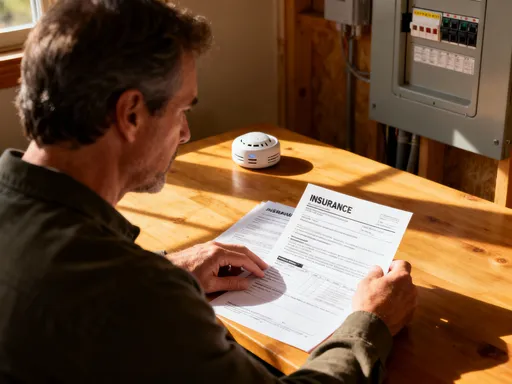
Another change was in my insurance. I had been with the same auto insurer for years, paying the same rate without questioning it. A quick comparison online showed I could save nearly 20% by switching providers. I took the time to research, compare coverage, and make the switch. The process took less than an hour, and the savings were immediate. I applied the same approach to my car loan. When interest rates dropped, I explored refinancing. After checking my credit score and shopping around, I found a lender offering a lower rate. By refinancing, I reduced my monthly payment slightly and, more importantly, cut thousands of dollars in projected interest over the life of the loan. These weren't windfalls—they were the result of being proactive.
I also reviewed my subscriptions. Like many people, I had accumulated streaming services, apps, and memberships I rarely used. I canceled three that I hadn't touched in months. The savings weren't huge, but they were effortless. I treated every dollar saved like a seed for future growth. I didn't see these actions as sacrifices; I saw them as upgrades—trading wasted spending for purposeful saving. The key was consistency. I didn't need to save $500 a month to make progress. Saving $100 consistently, with discipline, created momentum. Over time, these small decisions built a foundation of financial resilience.
Turning Loan Payments into a Financial Accountability System
Once I had established better habits, I wanted a way to maintain them. I needed structure, not just motivation. That's when I turned my car loan payment into a monthly financial checkpoint. Every month, a few days before the payment was due, I scheduled a 20-minute 'money meeting' with myself. During this time, I reviewed my budget, checked my account balances, tracked my savings progress, and assessed any recent spending decisions. I also reviewed my investment accounts to see how they were performing. This wasn't about stress or judgment—it was about awareness and alignment.
This routine became a powerful habit. It created a rhythm in my financial life. Just as the loan payment was non-negotiable, so was the check-in. I attached the two together: no payment without a review. This simple rule ensured I stayed engaged with my money, even during busy months. Over time, I noticed that these check-ins reduced impulsive spending. When I knew I would have to account for my choices, I made more thoughtful decisions. I also began to spot patterns—seasonal expenses, recurring subscriptions, or areas where I could optimize further. The process gave me a sense of control.
I also used this time to adjust my goals. If I had an unexpected expense, I revised my savings target for the month. If I received a bonus, I decided in advance how much to save, how much to invest, and how much to use. This prevented money from slipping through the cracks. I started to see my finances as a dynamic system, not a set of isolated transactions. The car loan, once a source of anxiety, became a trigger for positive action. It wasn't just about paying a bill—it was about reinforcing my commitment to long-term financial health. This accountability system didn't require perfection. It required presence. And presence, over time, led to progress.
Balancing Risk: Why I Avoided High-Stakes Moves
As my confidence grew, I admit I was tempted by stories of fast returns—crypto surges, stock market wins, 'get in early' opportunities. It was easy to imagine doubling my money in months, even weeks. But I reminded myself of my priorities. I was still paying off debt. I didn't have a large emergency fund. Taking on high-risk investments could jeopardize everything I was working toward. I decided to prioritize stability over speed. I focused on low-volatility options: high-yield savings accounts, short-term CDs, and diversified index funds. These wouldn't make me rich overnight, but they offered steady, predictable growth with minimal risk.
I also deepened my understanding of risk tolerance. I asked myself: how would I react if my investment dropped 20% in a month? If the answer was panic, then the investment wasn't right for me. I wanted options that allowed me to sleep at night. I also made building an emergency fund a top priority. I aimed for three to six months of essential expenses in a liquid account. This wasn't an investment in the traditional sense, but it was a critical part of financial security. It meant that if my car needed repairs or I had a medical bill, I wouldn't have to go deeper into debt. This buffer gave me peace of mind and allowed me to invest with more clarity.
Another principle I adopted was the idea that avoiding losses is just as important as earning gains. A 50% loss requires a 100% gain just to break even—a reality many overlook. By staying conservative, I protected my progress. I also resisted the urge to time the market. Instead, I focused on time in the market, letting compound growth work over years, not days. I reminded myself that financial growth is a marathon, not a sprint. The goal wasn't to win quickly, but to finish strong. This balanced approach didn't make headlines, but it built lasting results.
From Loan Burden to Financial Confidence: What Changed
Looking back, I can see that my car loan didn't hold me back—it pushed me forward. It forced me to confront my financial habits, ask better questions, and take responsibility. By combining disciplined repayment with mindful investing, I built not just credit, but confidence. I learned to see money as a tool, not a source of stress. Today, I make financial decisions with clarity and calm. I know I won't have perfect months, but I have systems that keep me on track. The real payoff wasn't just paying off the car—it was gaining control, one smart choice at a time.
What changed most was my mindset. I no longer avoid my finances or feel overwhelmed by numbers. I engage with them regularly, with curiosity and purpose. I've learned that financial health isn't about perfection—it's about progress. It's about making better choices today than you did yesterday. It's about building habits that compound, just like interest. And it's about knowing that even a seemingly negative experience, like carrying a loan, can become a catalyst for growth if you approach it with intention.
Now, when I see someone stressed about their car payment, I don't offer quick fixes. I share my story. I tell them that the payment itself isn't the problem—it's what you do around it that matters. You can let it drain you, or you can use it as a foundation for something stronger. Financial confidence doesn't come from having a lot of money. It comes from knowing how to work with what you have. And that's a skill anyone can learn, starting today.