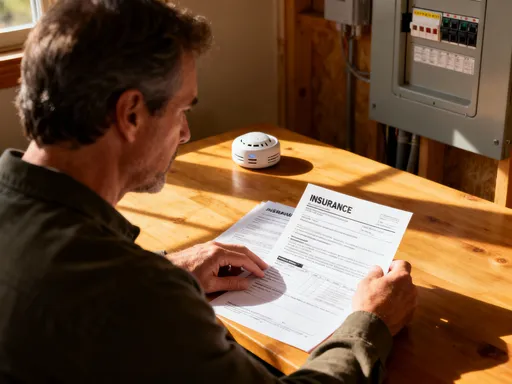
What I Did When I Lost My Job — A Beginner’s Shot at Safe Returns
Losing my job hit harder than I expected — not just emotionally, but financially. With bills piling up and no paycheck coming in, I panicked. But that crisis pushed me to explore practical ways to handle an unemployment emergency without risking everything. This is how I found strategies focused on stability, minimal risk, and the kind of returns that wouldn’t vanish overnight. If you're starting from zero, this might be exactly what you need. The experience taught me that financial survival isn’t about chasing fast money; it’s about making thoughtful, informed decisions that protect what you have while creating small but dependable streams of income. This is not a story of overnight success, but of steady choices made under pressure.
The Moment Everything Changed
The email arrived on a Tuesday morning. Subject line: "Important Update Regarding Your Employment." No warning, no conversation — just a formal notice that my position had been eliminated due to restructuring. At first, I sat frozen, rereading the message as if the words might change. Then came the wave — a mix of disbelief, embarrassment, and dread. The emotional toll was immediate, but the financial reality set in even faster. My last paycheck would cover rent, barely. After that? Nothing. No severance, no bridge, no safety net I hadn’t already counted on.
Within days, the silence of no incoming income became deafening. The refrigerator needed restocking. The car insurance payment was due. My phone bill, internet, health insurance — all fixed costs that didn’t pause because my job had ended. I had some savings, but not nearly enough to last more than a few months. The realization that I was now fully responsible for my financial survival, without the structure of a regular salary, was overwhelming. It wasn’t just about finding another job; it was about surviving the gap in between. And that gap felt like a chasm.
What made it worse was the uncertainty. How long would it take to find new work? Would I need to accept a lower-paying role just to get back on my feet? Could I afford to wait for something better? These questions swirled while the calendar kept moving. Each passing week without income eroded both my confidence and my balance. But in that pressure, I began to see a truth I’d ignored before: financial resilience isn’t built when the storm hits. It’s built long before. Since I hadn’t prepared fully, I had to start building it now — quickly, carefully, and with limited resources.
Why "Safe Returns" Matter Most in a Crisis
When income stops, the rules of money change. What once mattered — growing a portfolio, chasing market gains, investing in promising startups — suddenly becomes secondary. The priority shifts from growth to preservation. In normal times, a 7% annual return might seem modest. But in the middle of unemployment, losing 10% of your remaining savings can be catastrophic. That’s why the concept of safe returns isn’t just conservative — it’s essential. It’s not about getting rich. It’s about not getting poorer.
Many people, when faced with financial stress, make the mistake of seeking high-reward opportunities. They hear about someone doubling their money in crypto or making quick gains in options trading and think, "Why not me?" But those stories are outliers, not blueprints. High returns almost always come with high risk, and risk is the last thing you can afford when every dollar has to last. Imagine losing 20% of your emergency fund in a volatile investment just as you’re trying to cover rent and groceries. That kind of loss doesn’t just hurt — it can extend the crisis, delay recovery, and force even harder choices.
Safe returns, on the other hand, are about predictability. They’re not flashy, but they’re reliable. A 3% return on a stable, insured account may not excite anyone at a dinner party, but when it’s your only source of income between jobs, that steady growth becomes a lifeline. It means your money isn’t shrinking. It means you’re not losing ground while you search for work. It means you have time — and time is one of the most valuable assets during unemployment.
The shift in mindset is critical. Instead of asking, "How much can I earn?" the better question becomes, "How much can I protect?" This doesn’t mean abandoning growth entirely. It means delaying aggressive investing until stability is restored. It means accepting that financial recovery is a two-phase process: first, survive; second, grow. And the foundation of survival is capital preservation — keeping your money safe while generating modest, dependable returns that help you stretch your resources.
Building a Financial Buffer: First Steps After Job Loss
My first instinct after losing my job was to do something — anything — to make money. I considered selling old electronics, signing up for gig work, even liquidating a small investment account I’d opened years earlier. But before jumping into any action, I paused and asked a simple question: What do I actually need to survive? That question changed everything. Instead of reacting, I started planning. The first real step wasn’t about earning more — it was about spending less.
I sat down with a notebook and listed every monthly expense. Rent, utilities, phone, insurance, groceries, car payment, student loan — everything. Then I categorized them: essentials and non-essentials. The essentials were clear — things I couldn’t eliminate without serious consequences. The non-essentials were eye-opening. Subscriptions I barely used, takeout meals, gym memberships, even a monthly flower delivery I’d thought made the apartment feel cheerful. Cutting those saved over $200 a month, which may not sound like much, but in my situation, it meant an extra three weeks of breathing room.
Next, I reached out to every bill provider and asked for help. I called the utility company and explained my situation. They offered a deferred payment plan. I contacted my internet provider and switched to a lower-tier package, saving $30 a month. I negotiated with my landlord, who agreed to a two-month rent reduction in exchange for staying longer. These conversations weren’t easy — they required humility and honesty — but they made a real difference. Every dollar saved was a dollar that didn’t need to be earned or withdrawn from savings.
I also created a bare-bones budget — a version of my normal life stripped down to only what was necessary. Groceries shifted to store brands and bulk items. I stopped using ride-sharing apps and walked or biked when possible. I borrowed books from the library instead of buying them. This wasn’t about deprivation; it was about intentionality. The goal wasn’t to live poorly, but to live within the new reality. By stabilizing my outflow, I could focus on managing my remaining assets wisely, rather than reacting to constant shortages. This phase wasn’t glamorous, but it was foundational. Without this buffer, any investment strategy — no matter how safe — would have been undermined by ongoing financial leaks.
Where I Parked My Money — Low-Risk Options That Actually Work
Once I had a handle on my spending, I turned to the question of where to keep my money. My savings were in a regular checking account earning almost nothing. I knew I couldn’t afford to leave them there, but I also couldn’t risk losing them. I needed a place that was safe, accessible, and offered a modest return. After researching and consulting a financial counselor at a local credit union, I explored several low-risk options that fit my needs.
The first was a high-yield savings account. Unlike traditional banks, some online banks offer significantly higher interest rates because they have lower overhead. I moved a portion of my emergency fund into one of these accounts, where it began earning over 4% annually. That may not sound dramatic, but on $5,000, it meant an extra $200 a year — money I didn’t have to earn elsewhere. More importantly, the funds were FDIC-insured, meaning they were protected up to $250,000, and I could access them within a day if needed.
I also looked into short-term certificates of deposit, or CDs. These are time-bound deposits that offer slightly higher interest in exchange for leaving the money untouched for a set period — usually three to twelve months. I chose a six-month CD for a portion of my savings, locking in a 4.5% rate. It wasn’t a large amount, but it gave me a guaranteed return with no risk. I avoided longer-term CDs because I didn’t want to lose access to my money if I found a job sooner than expected or faced an unexpected expense.
Another option I considered was government-backed securities, like Series I Savings Bonds. These bonds are issued by the U.S. Treasury and offer inflation-adjusted interest rates, making them especially useful during periods of rising prices. I purchased a small bond with part of my fund, knowing it would be safe and would grow with inflation. While the liquidity is limited — you can’t cash it in for the first year, and there’s a penalty if you do before five years — it was a way to protect some of my savings from losing value over time.
What I avoided was anything with market exposure — stocks, mutual funds, ETFs, or crypto. Even so-called "stable" investments in these categories can fluctuate, and I couldn’t afford volatility. I also stayed away from peer-to-peer lending and private investment opportunities, no matter how promising they seemed. The lack of regulation and insurance made them too risky for my emergency fund. My rule was simple: if it wasn’t insured or guaranteed, it didn’t belong in my safety pool.
Avoiding the Traps: What Not to Do When You’re Desperate
When money is tight, every promise of income feels tempting. I started seeing ads for "risk-free" investment apps, "guaranteed" return programs, and side hustles that claimed to earn hundreds a week with no experience. Some even targeted people in unemployment, using language like "Turn your crisis into cash" or "Earn while you search." It was easy to imagine a solution just one click away. But desperation clouds judgment. I almost signed up for a program that promised 10% monthly returns by "automated trading" — until I dug deeper and found warnings from the Securities and Exchange Commission about similar schemes.
That was a wake-up call. Financial scams thrive during economic uncertainty. They prey on fear, urgency, and hope. Many use sophisticated websites, fake testimonials, and urgent countdown timers to create pressure. Some even mimic real financial institutions, using similar names or logos. The red flags are often subtle: promises of high returns with no risk, pressure to act quickly, lack of clear information about how the returns are generated, or requests for upfront fees.
I also realized how easy it is to make emotional decisions. A friend suggested I sell my car and invest the money in a "sure thing" real estate deal. Another recommended cashing out my retirement account to start a small business. Both ideas sounded bold, even heroic, in the moment. But they ignored the reality: I needed that car to get to interviews, and early withdrawal from retirement accounts comes with taxes and penalties that erode value. More importantly, both moves would have put my long-term security at risk for uncertain short-term gains.
The truth is, there are no shortcuts when rebuilding after job loss. Every dollar you lose now has to be earned twice — once to replace it, and again to rebuild. That’s why due diligence matters, even under pressure. I made a rule: if an opportunity sounded too good to be true, I waited 48 hours before responding. I researched the company, checked for regulatory filings, and talked to a trusted advisor. That simple delay saved me from several bad decisions. The most dangerous financial moves aren’t always the obvious scams — sometimes, they’re the well-meaning but poorly thought-out ideas that promise hope but deliver risk.
Making Every Dollar Work — Passive Income That Fits the Moment
With no active income, even small returns became meaningful. I began to think of my savings not just as a safety net, but as a tool — something that could work for me, even if I wasn’t working. The goal wasn’t to get rich, but to create a steady, passive drip of income that could help cover small monthly costs, like my phone bill or part of the grocery budget. Over time, those drips added up.
I focused on reinvesting interest automatically. In my high-yield savings account, I set up compound interest so that each month’s earnings were added to the principal, which then earned more. It wasn’t dramatic, but it was consistent. On a $10,000 balance at 4%, compounding monthly, I earned about $400 in the first year — and a bit more the next year because the base was larger. That’s not a salary, but it’s the equivalent of working a few extra shifts without lifting a finger.
I also explored dividend-paying instruments, but with caution. I didn’t buy individual stocks, but I did look into ETFs that focus on high-dividend, low-volatility companies — firms with long histories of stable payouts, like utilities or consumer staples. I allocated a small portion of my fund to one of these ETFs, understanding that while there’s some market risk, the dividend yield provided a small but regular income stream. I held it for six months, collected quarterly dividends, and then moved the principal back to a safer account when I started a new job.
Timing mattered, too. I paid attention to when interest payments were credited and aligned withdrawals with those dates. For example, I scheduled my rent payment right after a CD matured, so I could use the principal and interest together without breaking early. I avoided withdrawing from accounts during grace periods or incurring penalties. Every dollar saved from fees or lost interest was another dollar preserved.
This wasn’t about building wealth. It was about stretching stability. By making my money work in small, safe ways, I reduced the pressure to find immediate income. I gave myself time to search for the right job, not just any job. And that peace of mind was worth more than the returns themselves.
Looking Back: What I’d Do Differently Now
Today, I’m back at work, in a role that values my experience and offers stability. Looking back, I can see both what I did right and where I could have done better. The biggest lesson? Preparation matters. I wish I had started a high-yield savings account years earlier. I wish I had practiced living on a tighter budget before I had to. I wish I had researched low-risk investment options before I was under pressure to use them.
I also realize that emotional resilience is as important as financial strategy. The fear of failure, the shame of job loss, the constant worry — these took a toll that no budget could fix. I should have sought more support, whether through career counseling, support groups, or simply talking to others who had been through the same. Financial decisions made in isolation are harder and riskier.
If I could do it again, I’d set up my emergency fund in advance — not just the amount, but the structure. I’d open a high-yield savings account now, link it to my main bank, and treat it as untouchable except for true emergencies. I’d learn about CDs, I Bonds, and other safe instruments before I needed them. I’d create a financial playbook — a step-by-step guide for what to do if income stopped — so I wouldn’t have to figure it out in panic.
Most of all, I’d remind myself that job loss isn’t a reflection of worth. It’s a financial event, not a personal failure. And like any event, it can be managed with clarity, courage, and the right tools. The goal isn’t to avoid hardship — that’s not always possible — but to face it with a plan, not just a prayer.
Stability First, Growth Later
True financial security in a crisis isn’t about big wins — it’s about avoiding losses and staying afloat. The journey through unemployment taught one core principle: protect first, grow later. By focusing on return safety over return size, it’s possible to survive the worst months without sacrificing long-term stability. For anyone facing the same, the best move isn’t a gamble — it’s a careful, thoughtful step forward. Financial resilience isn’t built in a day, but it can begin with a single decision: to choose safety, clarity, and patience over fear and haste. That choice won’t make you rich overnight, but it might just keep you whole until the next paycheck arrives.