You Won’t Believe These Mind-Blowing Architectural Gems in Brno
Brno isn’t just the Czech Republic’s second city—it’s a hidden architectural playground. I went in expecting old churches and cobblestone streets, but left stunned by futuristic buildings, secret courtyards, and design stories I never saw coming. From surreal modernist villas to underground passages carved into rock, Brno’s skyline tells a bold, unexpected story. If you think architecture is boring, this city will change your mind—fast.
Why Brno’s Architecture Stands Out in Europe
While Prague dazzles with baroque symmetry and Vienna whispers imperial grandeur, Brno speaks in a different architectural dialect—one shaped by experimentation, resilience, and quiet innovation. As the largest city in Moravia and the historical capital of the region, Brno has long served as a cultural crossroads. Positioned between Germanic, Slavic, and Central European influences, it absorbed diverse styles while developing its own distinct identity. Unlike the monumental preservation seen in larger capitals, Brno embraced change, allowing new forms to emerge alongside the old without erasing the past.
What sets Brno apart is its role as a 20th-century design laboratory. During the interwar period, the newly formed Czechoslovakia sought modern solutions for housing, public services, and urban planning. Brno, already an industrial hub with textile and engineering roots, became fertile ground for progressive architects. With a population of just over 400,000, the city is large enough to support ambitious projects but small enough to allow bold designs to stand out rather than get lost in a sea of skyscrapers. This balance creates a skyline where a sleek glass tower can sit comfortably beside a centuries-old church, each enhancing the other through contrast.
The city’s architectural evolution reflects broader historical shifts. Austro-Hungarian elegance laid the foundation with ornate facades and grand boulevards. After World War II, functionalist and socialist realist buildings emerged, prioritizing utility over ornament. Yet even under political constraints, Brno’s architects found ways to innovate. Today, this layered history is visible at nearly every turn—walking through the city feels like flipping through the pages of a living architecture textbook. The result is a place where tradition and modernity don’t compete; they converse.
The Iconic Villa Tugendhat: A Modernist Masterpiece
No discussion of Brno’s architectural legacy is complete without mentioning Villa Tugendhat, a crown jewel of modernist design and a UNESCO World Heritage Site. Completed in 1930 by German architect Ludwig Mies van der Rohe, the villa was revolutionary in both concept and execution. Commissioned by Grete and Fritz Tugendhat, a wealthy industrialist couple, it was designed as a private residence that redefined domestic space. Its open-plan interior—made possible by a steel framework—eliminated load-bearing walls, creating a flowing, flexible environment that felt decades ahead of its time.
Standing inside the villa today, one is struck by the quiet elegance of its proportions. Floor-to-ceiling glass walls dissolve the boundary between interior and garden, flooding the space with natural light. The use of exotic materials—such as onyx from Morocco and rare woods from the South Pacific—adds warmth and sophistication. A signature feature is the movable glass wall that retracts completely into the ceiling, allowing the living area to open entirely to the terrace. This seamless integration of indoor and outdoor spaces was groundbreaking in the 1930s and remains influential in contemporary residential design.
Visiting Villa Tugendhat requires advance planning. Tours are guided and must be booked weeks in advance, especially during peak travel seasons. The best time to visit is early morning or late afternoon when sunlight enhances the play of transparency and reflection across the glass and marble surfaces. Many visitors overlook subtle details, such as the custom-designed ventilation system hidden in the floor or the original chrome-and-leather furniture meticulously restored to its original condition. These elements reflect Mies van der Rohe’s philosophy: “Less is more.” Every component serves a purpose, and nothing is superfluous.
Hidden Courtyards and Secret Passages Beneath the City
Beneath Brno’s orderly streets lies a labyrinthine world shaped by centuries of human activity. The city’s underground network includes medieval cellars, military fortifications, and wartime shelters, some stretching dozens of meters below the surface. These subterranean spaces, often overlooked by casual tourists, offer a tangible connection to Brno’s layered past. One of the most extensive systems lies beneath Špilberk Castle, once a fortress, prison, and military stronghold. Its tunnels, originally dug for storage and defense, were later expanded during World War II to serve as air raid shelters capable of housing thousands.
Walking through the Špilberk tunnels is a journey through time. The cool, damp air carries the weight of history—prisoners once paced these corridors, and families huddled here during bombing raids. Some sections remain dimly lit, with rough-hewn stone walls and low ceilings that evoke a sense of confinement. Yet, guided tours present these spaces with care, emphasizing their historical significance rather than dramatizing their darker chapters. Interpretive displays explain how the tunnels evolved over centuries, from medieval wine cellars to Cold War-era command centers.
But the underground story doesn’t end at Špilberk. Throughout the historic center, hidden courtyards and passageways connect buildings in unexpected ways. These arcaded walkways, known locally as “průchody,” were once practical solutions for merchants moving goods between streets. Today, they serve as charming shortcuts, often leading to quiet gardens, small galleries, or tucked-away cafes. One of the most picturesque is the courtyard of the Reduta Building, the site of the first official meeting of Czech and Slovak representatives in 1918. These spaces remind visitors that Brno’s charm often lies not in grand monuments, but in the quiet, human-scaled details.
From Gothic to Brutalist: A Walk Through Five Centuries
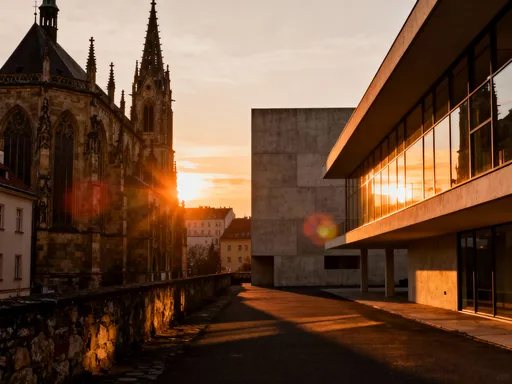
A single walk through central Brno can span centuries of architectural evolution. Begin at the Cathedral of St. Peter and Paul, perched on a hill overlooking the city. Its twin neo-Gothic spires dominate the skyline, but the site itself dates back to the 11th century. The current structure, completed in the 19th century, blends historical reverence with 19th-century engineering. Inside, ribbed vaults and stained-glass windows create an atmosphere of solemn beauty, while the surrounding churchyard offers panoramic views of the city’s architectural tapestry.
Just a short walk away, the architectural language shifts dramatically. Along Malinovského náměstí, broad avenues lined with socialist-era apartment blocks reflect the urban planning priorities of the mid-20th century. These buildings, constructed with prefabricated concrete panels, prioritize function and density. While often criticized for their uniformity, they represent an important chapter in Brno’s development—providing affordable housing during a period of rapid industrialization. Some have since been renovated with colorful facades and energy-efficient upgrades, softening their original austerity.
The contrast between old and new is not always harmonious, but it is always honest. In the same neighborhood, a Baroque church may stand beside a glass-and-steel office building, or a 19th-century townhouse may share a block with a minimalist cultural center. This architectural dialogue reflects Brno’s willingness to embrace change while preserving continuity. It’s a city that doesn’t hide its past—even the less glamorous parts—but integrates them into a dynamic urban fabric. For architecture enthusiasts, this coexistence offers endless opportunities for observation and reflection.
Contemporary Icons: Where Brno’s Future Is Being Built
Brno’s architectural story is far from finished. In recent years, the city has embraced sustainable, people-centered design in its new developments. One standout is the Moravian Square (Moravské náměstí) revitalization project, which transformed a once-neglected public space into a vibrant urban hub. The new complex includes retail, offices, and residential units, all wrapped in energy-efficient façades and connected by green spaces. Underground parking reduces street congestion, while wide pedestrian zones encourage walking and cycling.
Equally striking is the Brno University of Technology campus, where modernist principles meet 21st-century sustainability. The Faculty of Architecture building features a dramatic glass façade that maximizes daylight while minimizing heat loss. Rooftop solar panels, rainwater harvesting systems, and natural ventilation strategies reflect a commitment to environmental responsibility. Inside, open workspaces and collaborative zones foster creativity—fitting for a school training the next generation of designers.
What unites these contemporary projects is a focus on human experience. Public plazas, shaded seating areas, and interactive art installations invite residents and visitors to linger. Even functional structures, like the new tram stops, are designed with aesthetic care—using high-quality materials and clean lines. These details signal a shift from mere construction to thoughtful placemaking. Brno isn’t just building for the future; it’s building with intention, ensuring that new developments enhance rather than disrupt the city’s character.
How to Experience Brno’s Architecture Like a Local
To truly appreciate Brno’s architectural richness, it helps to move beyond the standard tourist trail. One of the best ways is to join Open House Brno, an annual event held each autumn as part of the global Open House Worldwide network. During this weekend, dozens of buildings—many normally closed to the public—open their doors for free. Architects often lead tours, offering insights into design choices, construction challenges, and historical context. Past highlights have included private modernist homes, working fire stations, and restored industrial lofts.
For independent exploration, several self-guided walking routes highlight key architectural periods. The Modernism Trail, for example, connects villas and apartment buildings from the 1920s and 1930s, showcasing functionalist design in everyday contexts. Smartphone apps like “Brno Architecture Map” allow users to identify buildings by pointing their camera, providing instant access to historical photos, architect names, and construction dates. These tools make it easy to turn a casual stroll into an immersive learning experience.
Viewpoints are essential for understanding the city’s spatial layout. The observation deck at Špilberk Castle offers one of the best panoramic perspectives, especially at sunrise or dusk when the changing light reveals subtle textures in the skyline. Another favorite among locals is the rooftop café at the Hotel Avanti, which overlooks the historic center and provides a relaxed setting for architectural reflection.
Pairing visits with coffee or a light meal in architecturally significant spaces enhances the experience. Café Sladkovský, housed in a restored 19th-century building, combines classical details with modern comfort. Meanwhile, Kavárna U Tří Růží, located in a quiet courtyard, offers a glimpse into Brno’s café culture within a beautifully preserved arcaded complex. These moments of pause allow the mind to absorb what the eyes have seen, turning sightseeing into a deeper form of engagement.
Why Brno Should Be on Every Architecture Lover’s Radar
In an age when iconic cities are overcrowded and overpriced, Brno offers a refreshing alternative—a place where architecture is not just preserved, but lived. It lacks the overwhelming scale of Paris or London, the tourist queues of Barcelona or Rome, yet delivers a comparable depth of design innovation. What makes Brno special is its authenticity. There’s no performative nostalgia here; instead, the city presents its history with honesty, allowing each era to speak for itself.
For women aged 30 to 55—many of whom balance family, work, and personal interests—Brno offers a travel experience that is both enriching and manageable. The city is compact enough to explore on foot, safe and well-connected by public transport, and rich in cultural offerings without being exhausting. A visit can be as relaxed or as intensive as desired: a single day focused on Villa Tugendhat and the cathedral, or a longer stay delving into underground tunnels, modernist villas, and contemporary design hubs.
More than just a collection of buildings, Brno’s architecture tells a human story—one of adaptation, creativity, and resilience. It’s a city that has weathered political change, economic shifts, and technological revolutions, yet continued to build with purpose. Its structures are not monuments to power or wealth, but reflections of everyday life—places where people lived, worked, and dreamed.
If you’ve ever thought that architecture is only for experts or enthusiasts, Brno will change your mind. Here, design is accessible, visible, and deeply woven into the fabric of daily life. From the curve of a staircase in a 1930s villa to the quiet dignity of a restored courtyard, beauty emerges in the details. The city doesn’t shout; it whispers. And if you listen closely, you’ll hear a story worth remembering.
So the next time you plan a European getaway, consider Brno—not as a backup option, but as a destination in its own right. Bring comfortable shoes, a curious mind, and an open heart. You may not expect to be moved by concrete, glass, and stone. But in Brno, architecture has a way of surprising you. And sometimes, it even changes the way you see the world.