You Won’t Believe What I Found in D.C.’s Quiet Corners
Washington D.C. isn’t just monuments and museums—it’s soul, rhythm, and hidden stories waiting to be felt. I went off the tourist trail, chasing authentic cultural moments, and what I discovered blew my mind. From whispered jazz in dimly lit basements to family-run eateries serving generations-old recipes, D.C.’s true spirit lives in its people and neighborhoods. This is not a guidebook version of the city. This is real, raw, and deeply personal. It’s the laughter spilling from a backyard barbecue in Anacostia, the steady beat of a djembe drum in a community garden, the quiet pride in a shopkeeper’s voice as she shares the history of her block. Beyond the polished marble and political power, there’s a different Washington—one built on resilience, creativity, and connection. And once you find it, you’ll never see the city the same way again.
Beyond the National Mall: Redefining the D.C. Experience
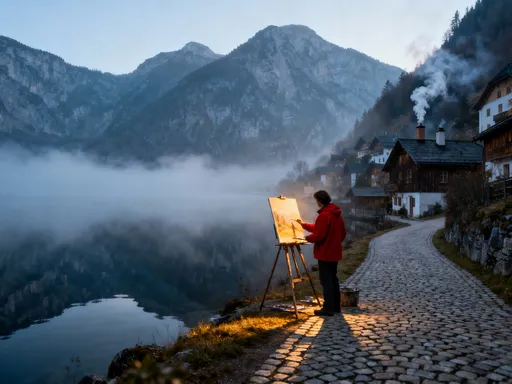
Most visitors arrive with a checklist: the Lincoln Memorial, the Smithsonian museums, the Capitol dome. These landmarks are undeniably powerful, each stone and exhibit a testament to the nation’s history and ideals. Yet, to limit D.C. to its federal core is to miss the living, breathing city that pulses just beyond the tourist maps. The real transformation in travel begins when sightseeing gives way to presence—when we step off the Metro at a lesser-known stop and allow ourselves to wander without agenda. In neighborhoods like Anacostia, Petworth, and Brookland, the rhythm of daily life unfolds in ways that no brochure can capture. Here, mornings begin not with tour buses but with fishermen casting lines along the Anacostia Riverwalk, their rods propped on rusted railings, eyes fixed on the water’s gentle ripples. Artists set up easels near Kenilworth Park, capturing the play of light on the marshlands, while runners and cyclists greet each other by name.
Slowing down reveals textures often overlooked. A bench beneath a sycamore tree becomes a listening post—overhearing conversations about school pickups, weekend plans, or the latest block association meeting. These moments are not staged; they are lived. The energy of a neighborhood isn’t found in its architecture alone but in the way people move through it, claim it, and care for it. In Anacostia, for example, community clean-up days bring together generations, turning vacant lots into gardens and graffiti-covered walls into murals. These acts of stewardship speak louder than any monument. They reflect a deep-rooted sense of belonging, a quiet defiance against neglect, and a commitment to dignity.
Choosing to explore beyond the National Mall is not just about seeing more—it’s about understanding more. It’s recognizing that D.C. is not a single narrative but a mosaic of stories, each shaped by migration, memory, and resilience. When travelers trade the crowded steps of the Washington Monument for a morning walk through Kingman Island, they encounter a different kind of awe—one rooted in nature, community, and the simple beauty of place. This shift in perspective transforms tourism from consumption into connection. It invites humility, curiosity, and respect. And in that space, real discovery begins.
The Pulse of U Street: Where History Meets Modern Soul
If D.C. has a cultural heartbeat, it beats strongest on U Street. Once known as "Black Broadway," this corridor has long been a sanctuary for African American art, music, and enterprise. Walking down U Street today is to walk through layers of history—each storefront, sidewalk, and streetlight holding echoes of legends like Duke Ellington, who was born just a few blocks away, and activists who organized from local churches and clubs. The Lincoln Theatre, restored to its 1920s grandeur, still hosts performances that honor its legacy as a stage for Black excellence. Stepping inside, even on a quiet afternoon, one can almost hear the ghost notes of Ella Fitzgerald’s voice or the applause that once greeted Cab Calloway’s flamboyant entrance.
Yet U Street is not a museum. It is vibrantly alive, constantly evolving while holding tight to its roots. Ben’s Chili Bowl, opened in 1958 by Ben and Virginia Ali, remains a cornerstone—its neon sign glowing like a beacon through decades of change. Generations have gathered here for half-smokes, milkshakes, and conversation, from civil rights leaders to presidents to high school friends catching up after work. The smell of grilled meat and spices lingers in the air, a sensory thread connecting past and present. Nearby, new businesses open alongside long-standing ones—bookstores specializing in African and African American literature, boutique shops featuring local designers, and coffee houses where poets scribble in notebooks between sips.
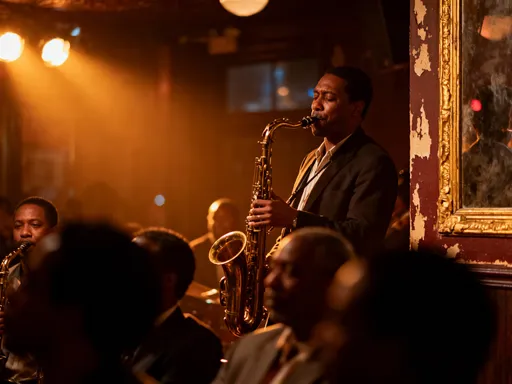
One evening, I followed the faint sound of a saxophone into a basement jazz club tucked between a barber shop and a vintage clothing store. The room was small, dimly lit, filled with the warmth of bodies packed close. A quartet played an original composition, each note rich with improvisation and history. The audience—mostly locals—nodded along, some closing their eyes, others whispering lyrics under their breath. There were no tourist menus, no overpriced drinks, just music for music’s sake. In that moment, I understood what preservation truly means: not freezing a culture in time, but allowing it to grow while honoring its foundation.
Gentrification has undeniably reshaped U Street, bringing new residents, higher rents, and changing storefronts. Some worry that the soul of the neighborhood is being priced out. And yet, the community’s voice remains strong. Cultural festivals, heritage tours, and grassroots organizations work tirelessly to ensure that Black history is not erased but celebrated. The U Street Jazz Festival, held every summer, draws thousands and features both veteran musicians and emerging talent. These efforts reflect a deeper truth: identity cannot be bought or bulldozed. It persists—in music, in memory, in the way people greet each other on the sidewalk. To walk U Street is to witness resilience in motion.
Taste of Tradition: Food as Cultural Storytelling
In D.C., every meal can be a conversation with history. The city’s culinary landscape is a rich tapestry woven from African American traditions, Caribbean influences, and waves of immigration—from Ethiopia, El Salvador, Vietnam, and beyond. Food here is more than sustenance; it is memory, identity, and love made tangible. Nowhere is this clearer than in Shaw, where a family-owned Ethiopian restaurant has served injera and doro wat for over thirty years. The owner, Selam, greeted me like an old friend, her hands dusted with flour as she rolled out sourdough flatbread. "This recipe,” she said, "my mother taught me in Addis Ababa. Now my daughter helps me every weekend. It’s how we stay close, even when life pulls us in different directions."
Sitting at a low wooden table, I watched as platters arrived—colorful stews heaped onto spongy injera, shared from the same plate as tradition demands. There was no silverware, only hands, laughter, and stories. A group of elders in the corner debated politics in Amharic, while a young couple celebrated their first anniversary. The restaurant wasn’t just a place to eat; it was a community hub, a living room for the neighborhood. This kind of dining experience—intimate, communal, rooted—cannot be replicated in a chain restaurant or a themed café. It thrives because it is real, because it matters.
In Southeast D.C., Sunday dinner remains a sacred ritual. Families gather in homes filled with the scent of collard greens, fried chicken, and sweet potato pie. These meals are more than comfort food—they are acts of continuity. Grandmothers pass down recipes not through written notes but through demonstration, guiding small hands as they stir pots or season cornbread. The kitchen becomes a classroom, the table a sanctuary. Even in modern times, when schedules grow tighter and lives more fragmented, many make space for this weekly tradition. It’s a way of saying, "We remember where we come from. We take care of each other. We are still here."
Across the city, food markets and pop-ups carry this spirit forward. Eastern Market, open since 1873, hosts farmers, bakers, and artisans every weekend. Stalls overflow with fresh produce, handmade soaps, and hot empanadas. It’s a place to shop, yes, but also to linger—to sip coffee with a neighbor, to watch a potter shape clay, to listen to a folk singer strumming in the corner. Pop-up events in parks and parking lots bring together immigrant chefs showcasing their heritage, from Salvadoran pupusas to Trinidadian doubles. These gatherings do more than feed bodies; they nourish belonging. They remind us that culture is not static—it moves, adapts, and thrives when shared with open hands.
Art That Speaks: Murals, Galleries, and Community Voice
Walk through Petworth or Brookland, and you’ll find art not confined to galleries but alive on walls, fences, and alleyways. D.C.’s public art scene is a powerful testament to community expression—colorful murals that tell stories of resistance, celebration, and hope. In Petworth, a massive painting of a Black child reading under a tree bears the words: "Our Future is Bright." Nearby, another mural honors local veterans, their faces rendered in bold strokes of blue and gold. These works are not commissioned by distant corporations but created by artists who live in the neighborhood, who know its struggles and its strengths.
I met Marcus, a muralist who grew up in Northeast D.C., as he touched up a piece in Brookland depicting a line of dancers in traditional African dress, their movements flowing into symbols of unity and progress. "Art,” he told me, "is how we claim space. When the world ignores us, we paint our truth so no one can look away." His words stayed with me as I continued through the neighborhood, discovering more works—tributes to lost loved ones, calls for justice, celebrations of motherhood and music. Each mural was a chapter in a larger story, one written by the people themselves.
Inside the Workhouse Arts Center and smaller cooperative galleries, the conversation continues. These spaces showcase paintings, sculptures, and mixed media from D.C.-born and D.C.-based artists, many of whom use their work to process gentrification, displacement, and cultural pride. One exhibit featured photographs of Anacostia homes, each image accompanied by a resident’s handwritten note about what home means to them. Another displayed quilts made from old clothing, each patch a memory stitched into fabric. These pieces do not shout; they speak softly, intimately, inviting the viewer to listen.
What makes D.C.’s art scene so powerful is its accessibility. You don’t need a museum membership or a gallery opening invitation. You just need to walk, to look, to pause. And when you do, you become part of the dialogue. I watched a young girl stop in front of a mural of Harriet Tubman, her eyes wide. "Is that her?” she asked her mother. "Yes,” came the reply. "She was brave. She helped people find freedom." In that moment, art was education, inspiration, legacy. It was proof that creativity is not a luxury but a necessity—one that sustains communities and shapes identity.
Finding Ritual: Cultural Practices in Everyday Life
One morning, I arrived at Meridian Hill Park just as the sun crested the trees. A small group stood in a half-circle on the grass, moving in slow, deliberate motions. Their arms rose and fell like branches in a breeze—this was a tai chi session, led by a retired teacher who has practiced in the park for over twenty years. "It’s not just exercise,” he told me afterward. "It’s meditation. It’s community. We’ve been meeting here every Saturday for fifteen years. Some of us have lost spouses, faced illness, moved away and come back. But we always find each other here."
Later that week, I attended a spoken word poetry night in Columbia Heights. The room was packed—mostly young adults, but also elders and families with teenagers in tow. The stage was simple: a mic, a stool, a cup of water. But the words that followed were anything but simple. Poets spoke of immigration, identity, love, loss, and the weight of expectation. One young woman recited a piece about her mother’s hands—how they cooked, cleaned, prayed, and held her when she cried. The room fell silent, then erupted in snaps and murmurs of "tell the truth." These gatherings are not performances; they are offerings, shared in trust.
What struck me most was the sense of safety in these spaces. No one was selling anything. No one was filming for social media. People came to listen, to be seen, to belong. In a city often defined by power and policy, these rituals offer something deeper: a reminder that life is not just about achievement but about connection. Whether it’s a drum circle in Malcolm X Park, a chess game on a folding table in Anacostia, or a neighborhood block party with a borrowed sound system, these informal gatherings sustain cultural continuity. They pass down values not through lectures but through presence.
Public spaces make these moments possible. Benches, parks, community centers—these are not just infrastructure; they are the stage for everyday life. When cities invest in safe, welcoming public areas, they enable culture to flourish organically. And when travelers take the time to observe or even participate—respectfully, quietly—they gain access to a truth no tour guide can provide. Ritual is not spectacle. It is lived experience. And in D.C., it is everywhere, if you know where to look.
Navigating the City Like a Local: Practical Insights
To truly experience D.C.’s hidden corners, timing and approach matter. The best moments often happen outside peak hours. Visit U Street on a Tuesday evening instead of Saturday night, and you’ll find jazz clubs with intimate crowds and unhurried conversations. Explore Eastern Market early on a Saturday morning, when the air is crisp and vendors are just setting up their stalls. Ride the Metro during off-peak times—mid-morning or mid-afternoon—and you’ll have space to observe, to read, to strike up a conversation with a local commuter.
The city’s public transit system, especially the Metro and Capital Bikeshare, makes low-impact exploration easy. A Metro pass allows access to every quadrant of D.C., from the leafy streets of Tenleytown to the vibrant markets of Mount Pleasant. Biking along the Metropolitan Branch Trail offers a scenic, car-free route through several neighborhoods, with stops at community gardens, playgrounds, and small cafes. These modes of transport don’t just get you from place to place—they immerse you in the rhythm of daily life.
When engaging with residents and small businesses, respect is key. Ask before taking photos, especially of people or private property. Support local shops by purchasing a coffee, a handmade candle, or a piece of art. If you’re invited to a community event, attend with humility—listen more than you speak, observe before you participate. Many neighborhoods have block associations or cultural centers that welcome visitors during open events. These are not tourist attractions; they are community spaces. Treat them with the care you would your own neighborhood.
Finally, support community-led initiatives. Buy from cooperatives, attend fundraisers for local arts programs, and consider donating to organizations that preserve cultural heritage. When tourism lifts up the people who make a place special, it becomes a force for good. D.C. does not need more crowds at the Tidal Basin. It needs thoughtful visitors who come not to take, but to connect.
Why This Kind of Travel Matters
Travel has the power to transform—not just the traveler, but the places we visit. When we choose depth over checklist sightseeing, we shift from passive observers to active participants in a shared human story. The moments that stay with us—the taste of injera at a family table, the sound of jazz in a basement club, the sight of a mural glowing in the afternoon light—are not accidental. They come from slowing down, from listening, from showing up with curiosity and heart.
Mindful tourism is not about rejecting famous landmarks. It’s about balance. It’s standing in awe of the Lincoln Memorial, then walking to nearby LeDroit Park to see how families picnic in the park every Sunday. It’s recognizing that history is not just in monuments but in the way people live today. It’s understanding that culture is not a performance for visitors but a way of life.
When we seek emotional resonance over perfect photos, we open ourselves to connection. We learn that dignity, creativity, and resilience are not abstract ideals but daily practices. We see that every city has layers—and the deepest ones are often hidden in plain sight. D.C., with its complex history and vibrant communities, invites this kind of exploration. It asks us to look beyond the surface, to honor the people who shape its soul.
So the next time you plan a trip—any trip—consider this: What if your goal wasn’t to see everything, but to feel something real? What if you traveled not to collect experiences, but to deepen your understanding of the world and your place in it? Start small. Step off the main path. Talk to a shopkeeper. Sit in a park. Listen. The quiet corners are waiting. And they have stories that will change you.