You Won’t Believe What I Found in Pompeii’s Hidden Workshops
Walking through Pompeii, I expected ancient ruins — not handmade treasures still alive today. But tucked in quiet corners, local artisans keep Roman traditions alive, crafting goods you can’t find anywhere else. From volcanic-soap bars to pumice-based skincare, these specialty products blend history and innovation. This isn’t just shopping — it’s connecting with a 2,000-year-old culture in the most unexpected way. The air carries the scent of sun-warmed stone and olive oil, while the distant hum of Vesuvius reminds visitors that this land is both fragile and fertile. Beneath the shadow of one of history’s most dramatic natural disasters lies a quiet renaissance — one shaped not by archaeologists, but by hands that still work with the same earth that buried a civilization.
Beyond the Ruins: A Different Side of Pompeii
Most travelers arrive in Pompeii eager to walk the same cobblestone streets once trod by Roman citizens nearly two millennia ago. The Forum, the amphitheater, and the plaster casts of victims are powerful reminders of life interrupted. Yet beyond the main pathways, where tour groups gather and cameras click, a quieter story unfolds. In narrow alleys just a few minutes’ walk from the ancient city gates, small workshops buzz with creativity. Here, the legacy of Pompeii is not frozen in time — it is being remade, one handcrafted object at a time.
These workshops are not advertised on tourist maps. They lack flashy storefronts or multilingual signs. Instead, they reveal themselves through subtle cues: the rhythmic tapping of a potter’s tool, the rich aroma of olive oil soap curing on wooden racks, or the sight of a woman hand-stamping ceramic tiles with geometric patterns seen in excavated villas. This living culture thrives precisely because it does not cater solely to tourism. These artisans serve local families, regional boutiques, and discerning visitors who seek authenticity over souvenir trinkets.
What makes this aspect of Pompeii so compelling is its contrast. While the ruins preserve a moment of catastrophe, the workshops embody resilience and continuity. The same volcanic soil that preserved bodies and buildings also nourishes new forms of expression. These creators do not simply replicate the past — they reinterpret it, using ancient knowledge as a foundation for modern craftsmanship. In doing so, they invite visitors to see Pompeii not as a museum exhibit, but as a source of ongoing inspiration.
The Power of Vesuvius: How Volcanic Materials Shape Local Crafts
The eruption of Mount Vesuvius in 79 AD was catastrophic, burying Pompeii and nearby Herculaneum under meters of ash and pumice. Yet from this destruction emerged a unique geological gift. The volcanic deposits left behind are rich in minerals, porous textures, and natural abrasives — qualities that have long been harnessed by local artisans. Today, pumice stone, volcanic clay, and ash are not just remnants of the past; they are essential ingredients in a growing movement of earth-based craftsmanship.
Geologists confirm that the soils around Vesuvius contain high levels of silica, magnesium, and trace minerals, which contribute to the efficacy of skincare products made from these materials. Pumice, for instance, is naturally exfoliating and gentle on the skin, making it ideal for soaps and body scrubs. Local soap makers collect pumice from controlled, sustainable sources on the lower slopes of the volcano, ensuring environmental protection while maintaining supply. The material is finely ground and blended with olive oil, lavender, and other regional botanicals to create products that are both therapeutic and deeply connected to the land.
Volcanic clay, another byproduct of the eruption, is used in facial masks and ceramic glazes. Its absorbent properties make it excellent for drawing out impurities, a benefit recognized even in Roman times. Historical records indicate that Roman bathhouses used similar clays for cleansing rituals. Modern artisans honor this tradition by combining ancient practices with today’s understanding of dermatology and sustainability. The result is a range of products that are not only effective but also tell a story of adaptation and renewal.
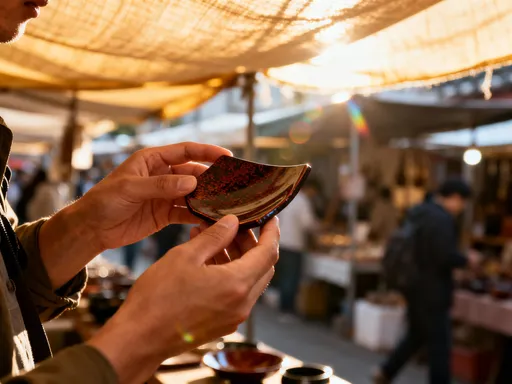
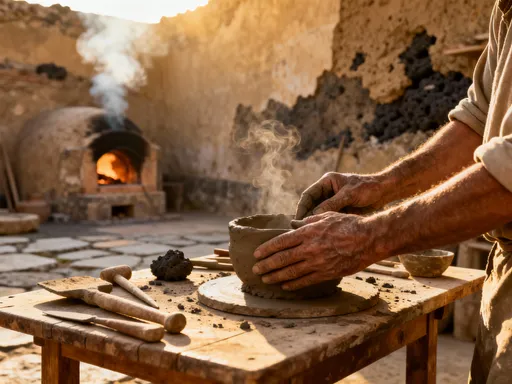
Even the ceramics produced in the region benefit from the volcanic soil. Potters note that clay sourced near Boscoreale and Torre Annunziata fires differently than other clays — it vitrifies at lower temperatures and produces a distinctive reddish hue reminiscent of Roman pottery. This connection between geology and artistry is not incidental; it is central to the identity of these crafts. The volcano, once a force of destruction, now fuels a quiet renaissance of creativity rooted in nature’s gifts.
Artisans of the Ash: Meet the Makers Keeping History Alive
One of the most rewarding aspects of exploring Pompeii’s craft scene is meeting the people behind the products. Their stories are not of sudden inspiration, but of deep-rooted tradition, often passed down through generations. In a small workshop just outside the ancient city walls, Maria Riccioli greets visitors with flour-dusted hands and a warm smile. Her family has been making olive oil soap for over a century, using a recipe that dates back to her great-grandmother’s time. “We don’t use machines,” she explains. “Every bar is poured, cut, and stamped by hand. It takes longer, but the quality is in the care.”
Maria’s workshop is a sensory delight. Rows of pale green soap bars line wooden shelves, their surfaces marked with a simple olive branch stamp. The scent of fresh herbs lingers in the air — rosemary, thyme, and lemon balm from her garden. She explains that each batch uses locally pressed olive oil, a staple of the Campanian diet and a key ingredient in Roman hygiene practices. “The Romans knew olive oil was good for the skin,” she says. “We’re just continuing what they started.”
Not far away, in the town of Torre Annunziata, ceramicist Luca Esposito works at a kick-wheel passed down from his grandfather. His studio is filled with unfired clay pieces — plates, vases, and decorative tiles — all adorned with patterns inspired by frescoes found in Pompeian homes. “I’ve studied the designs from the House of the Faun and the Villa of the Mysteries,” he says. “I don’t copy them exactly, but I use the same symmetry, the same balance.” Luca’s glazes are made with volcanic ash, giving his pieces a subtle shimmer that changes in sunlight.
Then there is Elena Marini, a perfumer in Boscoreale who creates fragrances based on botanicals depicted in ancient wall paintings. Her studio is a blend of science and artistry, with glass vials of essential oils and hand-drawn sketches of Roman gardens. “I looked at frescoes showing garlands of roses, myrtle, and lilies,” she says. “Then I researched which of those plants still grow here. My ‘Fresco No. 7’ scent combines rose absolute, myrtle leaf, and a touch of honeyed almond — ingredients mentioned in Roman texts.” Her perfumes are bottled in hand-blown glass with clay seals, echoing the elegance of antiquity.
These artisans share more than skill — they share a quiet pride in their work. They are not performers for tourists; they are custodians of a cultural legacy. Their workshops are not staged for show, but lived-in spaces where tradition meets daily practice. Meeting them transforms a visit to Pompeii from a passive observation of history into an active engagement with it.
What Makes These Products Truly Special?
In a world of mass-produced souvenirs, the items crafted in and around Pompeii stand apart. They are not made in factories, nor are they designed to be disposable. Each product carries intention — in its ingredients, its creation, and its connection to place. What makes them truly special is not just their quality, but their authenticity. These are not imitations of antiquity; they are continuations of it.
Take, for example, the volcanic soap. Unlike commercial soaps filled with synthetic fragrances and preservatives, these bars are made with minimal ingredients: olive oil, water, lye, and finely ground pumice. The process follows cold-saponification, a method that preserves the natural glycerin in the oil, resulting in a moisturizing bar that cleanses without stripping the skin. The addition of local herbs enhances both scent and function — rosemary for circulation, lavender for calm, thyme for its natural antiseptic properties.
Similarly, the ceramics are not merely decorative. They are functional objects made with techniques that have changed little since Roman times. Luca, the potter, uses a reduction firing method that limits oxygen in the kiln, producing the same deep reds and blacks seen in ancient amphorae. The patterns he uses — interlocking circles, meander borders, floral motifs — are not random. They echo designs found in archaeological digs, linking each piece to a visual language that has endured for centuries.
Even the perfumes are rooted in historical accuracy. Elena, the perfumer, consults botanical records and archaeological findings to ensure her scents reflect what might have been used in Roman households. She avoids modern synthetic musks, instead relying on natural extracts and traditional distillation methods. The result is a fragrance that feels timeless — not a recreation, but a reimagining.
What unites these products is their narrative depth. To own one is to hold a piece of living history. It is to support a craftsperson who values tradition, sustainability, and beauty. In a time when so much feels fleeting, these objects offer a sense of permanence — not because they are ancient, but because they are made to last, with care and purpose.
Where to Find Them: A Practical Guide for Travelers
For travelers eager to discover these authentic crafts, knowing where to look is essential. While souvenir shops near the Pompeii entrance sell trinkets labeled “Roman-style,” few offer the genuine articles made by local artisans. To find the real thing, visitors should venture beyond the main site into nearby towns such as Torre Annunziata, Boscoreale, and San Giuseppe Vesuviano. These communities are home to cooperatives, family workshops, and certified boutiques that prioritize authenticity.
One reliable option is the Artigiani del Vulcano cooperative in Torre Annunziata, which brings together potters, soap makers, and textile artists. Their storefront displays clear labeling indicating the origin of materials, production methods, and maker information. Prices are fair and consistent, reflecting the labor involved without overcharging tourists. The staff speak basic English and are happy to explain the history behind each product.
Another trusted destination is La Bottega del Sole in Boscoreale, a small shop specializing in natural soaps and skincare. Run by a group of women from local farming families, the shop sources all ingredients within a 15-kilometer radius. Visitors can watch soap being cut and wrapped on certain days, and staff offer samples to test texture and scent. The shop is open Tuesday through Saturday, 9:00 AM to 1:00 PM and 4:00 PM to 7:00 PM, making it ideal for afternoon visits after touring the ruins.
For ceramics, the Laboratorio Ceramico Esposito in Torre Annunziata offers both retail and workshop tours by appointment. Seeing the potter at work adds depth to the purchase, and visitors often leave with a greater appreciation for the skill involved. It’s advisable to call ahead, as the studio is small and prioritizes working time.
When shopping, look for specific markers of authenticity. Genuine volcanic soap will list pumice and olive oil as primary ingredients, with no synthetic additives. Handmade ceramics will show slight variations in shape and glaze — signs of human touch, not flaws. Labels should include the maker’s name, location, and production date. Avoid items priced too low; true craftsmanship requires time and skill, and fair pricing supports sustainable practice.
Engaging respectfully with artisans also enhances the experience. A simple greeting in Italian — “Buongiorno” — goes a long way. Asking questions about the process shows genuine interest. Many makers appreciate when visitors take the time to understand their work, even if no purchase is made. These interactions, brief as they may be, become part of the journey — moments of connection across cultures and centuries.
Bringing Pompeii Home: How to Use and Share These Treasures
Bringing a piece of Pompeii home is about more than souvenirs — it’s about integrating history into daily life. A bar of volcanic soap isn’t just a reminder of a trip; it’s a daily ritual that connects the user to the land and its people. Used in the shower, it exfoliates gently while releasing the scent of Mediterranean herbs, turning an ordinary routine into a sensory experience rooted in tradition.
Handmade ceramic tiles can be framed as wall art or used in kitchen backsplashes, bringing a touch of Roman elegance to modern homes. Their geometric patterns add visual interest while honoring ancient design principles. Some families use them as centerpieces or coasters, blending function with heritage. Because each piece is unique, it becomes a conversation starter — a way to share the story of the artisan, the volcano, and the enduring spirit of craftsmanship.
Perfumes like Elena’s “Fresco No. 7” can be worn or used as room scents. A few drops on a cotton pad in a drawer infuse linens with a subtle, historical aroma. Gifting a curated set — a soap, a small ceramic dish, and a vial of perfume — offers a multi-sensory introduction to Pompeii’s living culture. Such gifts carry more meaning than mass-produced items, reflecting thoughtfulness and cultural appreciation.
Equally important is the ethical dimension of these purchases. Every item bought directly from an artisan or cooperative supports local families and sustainable practices. It helps preserve traditional skills that might otherwise fade. In choosing these products, travelers become part of a larger story — one of cultural continuity and mindful consumption. They help ensure that the legacy of Pompeii is not confined to textbooks, but lives on in homes around the world.
Why This Experience Changes How You See Ancient Sites
Discovering the hidden workshops of Pompeii transforms the way we understand ancient sites. No longer are they static relics of a distant past, but living landscapes shaped by ongoing human creativity. The ruins tell us what was lost; the artisans show us what endures. This duality enriches the travel experience, moving it beyond observation into participation.
When visitors engage with craftspeople, they see history not as a finished chapter, but as a thread that continues to weave through time. The same earth that preserved plaster casts of the dead now nurtures new forms of life — in gardens, in kitchens, in studios. The volcano, once a symbol of destruction, becomes a source of renewal. This shift in perspective fosters deeper respect for both the past and the present.
It also encourages a more thoughtful approach to travel. Instead of rushing from site to site, collecting photos and souvenirs, travelers begin to seek out stories, connections, and authenticity. They learn to look beyond the obvious, to listen to local voices, and to support communities that keep culture alive. In doing so, they contribute to a more sustainable and meaningful form of tourism.
Pompeii, in this light, becomes more than an archaeological wonder. It becomes a lesson in resilience — in how people rebuild, adapt, and create beauty even after tragedy. The artisans working with volcanic materials are not just preserving history; they are redefining it. They remind us that culture is not something to be dug up and displayed behind glass. It is made fresh every day, in quiet workshops, with hands that remember.
So the next time you walk among ancient stones, look beyond the ruins. Seek out the makers, the quiet creators, the ones keeping traditions alive. Because the true soul of a place is not always in its monuments — sometimes, it’s in the scent of olive oil soap, the weight of a handmade tile, or the whisper of a loom in a backstreet studio. That is where history breathes. That is where it lives.